Question 5: What are squares and islands?
Archana Bhat: These two signs are often discussed together because they are traditionally viewed as opposites.
A square is a clear, four-sided shape. It is one of the most positively viewed signs in palmistry and is traditionally called a “sign of protection”. When a square appears over a break in a line, it is often interpreted as a period of difficulty that is safely overcome or supported.
An island is a small oval loop where a line splits and rejoins. Islands are traditionally associated with a period of reduced energy, distraction or difficulty related to that line’s meaning. For example, an island on the head line may be read as a period of stress or lack of focus. Islands are usually seen as temporary phases, not permanent conditions.
I always remind readers: an island on a line is not a diagnosis of anything. If you have concerns about your health or well-being, please speak to a doctor, not a palmist.
Question 6: What is the significance of branches and small lines?
Archana Bhat: Branches are small lines that split off from a major line. Traditionally, branches rising upward are viewed positively and associated with growth, optimism and opportunities. Branches falling downward are often associated with setbacks or efforts that require more energy.
Small lines crossing the major lines are often called influence lines or worry lines. Traditional palmistry associates them with outside influences or temporary concerns. Palms with many such fine lines are traditionally linked with sensitive, thoughtful people, while palms with very few may be associated with a calm, straightforward nature.
Question 7: Are all unusual markings considered important?
Archana Bhat: No. This is one of the most valuable lessons for a beginner. Not every small mark is a meaningful sign. A true sign in traditional palmistry should be clear, well formed and distinct from the surrounding lines. A vague shape, a half-formed triangle or a faint criss-cross usually does not carry much weight.
Experienced palmists tend to give special attention only to signs that are clear, are found in both hands or sit in a significant location, such as on a major line or at the centre of a mount.
Question 8: Can markings be confused with natural skin creases?
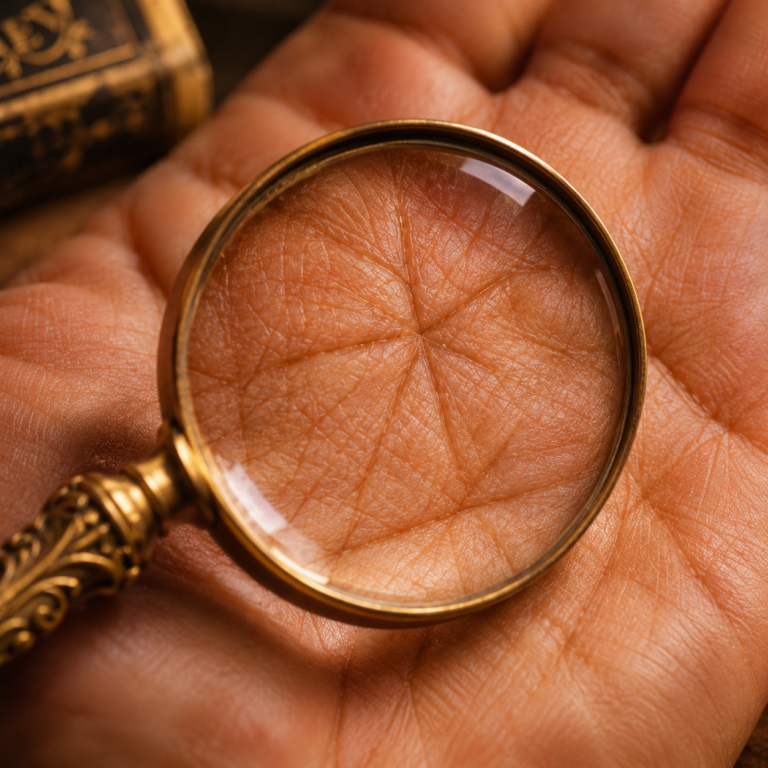
Archana Bhat: Very easily. The palm naturally folds and creases as we use our hands. Dry skin, small cuts, calluses and temporary marks from holding objects can all create shapes that look like stars, crosses or grilles.
A few practical tips: look at your palm in good natural light, keep the hand relaxed rather than tightly stretched or cupped, check both hands, and look again on another day. If a “sign” disappears when you move your hand slightly, it is probably just a crease.
Simple example: Try making a loose fist and then opening your hand slowly. Watch how many small lines appear and disappear. This simple exercise shows how easily ordinary creases can be mistaken for special markings.
Question 9: Why should special signs never be interpreted without considering their location and surrounding lines?
Archana Bhat: Because in traditional palmistry, a sign has no fixed meaning by itself. The same cross can be read positively on one mount and as a challenge on another. A square on a line means something different from a square in an open area of the palm.
The surrounding lines matter too. A star at the end of a strong sun line would be traditionally read very differently from a star sitting alone in a crowded area of fine lines. The hand type, the strength of the mounts and the overall pattern of lines all shape the interpretation.
Reading a sign in isolation is like reading a single word from a page and trying to guess the whole story. You need the context.
Common Myths and Misconceptions
- “A star means you will be famous.” A star is traditionally linked with significant events, and its meaning depends on location. It does not guarantee fame.
- “A cross is always a bad omen.” Crosses on Jupiter and the “mystic cross” are traditionally positive.
- “An island means illness.” Islands are traditional symbols of temporary phases, not medical diagnoses.
- “Rare signs mean a special destiny.” Signs are traditionally interpreted as modifiers, not proof of destiny.
- “Every small mark is a sign.” Most marks are natural creases; true signs are clear and well formed.
Key Takeaways
- Special signs include stars, crosses, triangles, squares, islands, branches, grilles and chains.
- Triangles and squares are generally viewed positively; islands and many crosses as challenges.
- Upward branches are traditionally positive; downward branches signal effort or setbacks.
- Many apparent signs are ordinary skin creases. Check carefully and in both hands.
- Always interpret a sign in light of its location and the surrounding lines.
A Closing Note from Archana
“Finding a small star or triangle on your palm can be a delightful moment of discovery. Enjoy it with curiosity, and remember that every sign is just one small detail in a much larger picture. In our final conversation, we will step back and talk about how palmistry can be used, thoughtfully and responsibly, as a tool for self-reflection.”
About the Author
Archana Bhat is a palmistry expert who shares the traditional knowledge of hand reading in simple, accessible language for beginners and curious readers. Through “The Wisdom of Palmistry” series, she encourages readers to approach palmistry as a cultural tradition and a tool for self-reflection, never as a substitute for professional advice.
Consultations
Discover insights into your personality, strengths, relationships, career and life journey through personalised palmistry consultations.
Consultations Available In: Telugu, Hindi, Marathi & English.
🌍 Special Consultations for NRI Clients – Flexible appointment timings according to your country and time zone.
For Appointments & Enquiries:
📞 +91 8977118552
📞 +91 9082650679