Question 5: Can palmistry reliably predict marriage?
Archana Bhat: No, it cannot. I understand why people ask this, especially in cultures where marriage is a major family topic, but there is no scientific evidence that palm lines can predict whether, when or whom a person will marry.
Traditional palmistry has many ideas about marriage lines, and they are interesting from a cultural point of view. However, relationships depend on so many real factors: personal choices, compatibility, circumstances, communication, family and timing. None of these are written in the skin of your hand.
If anyone tells you that a line “proves” you will marry late or not at all, please do not let that worry you or influence your choices.
Question 6: What role does the heart line play in traditional readings?
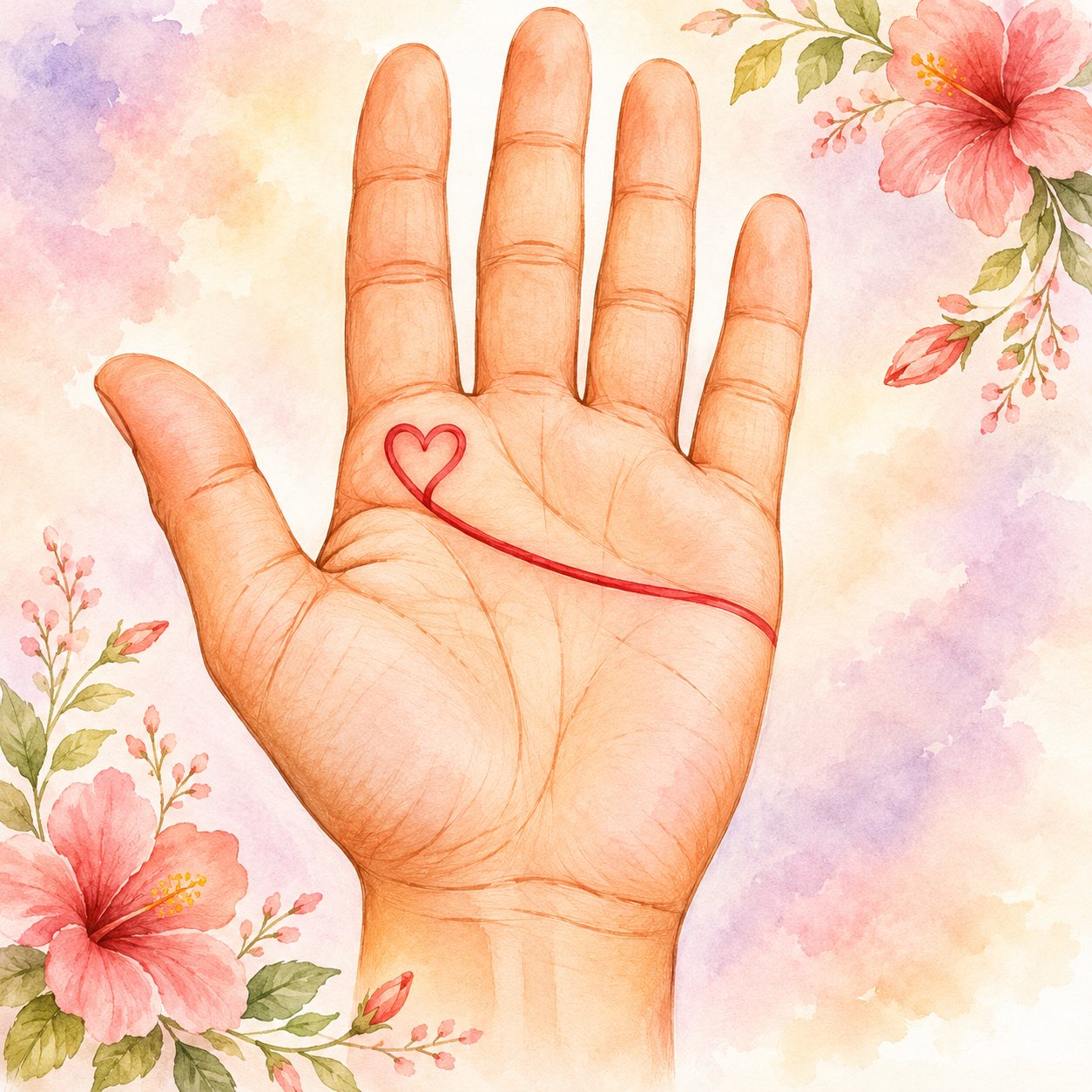
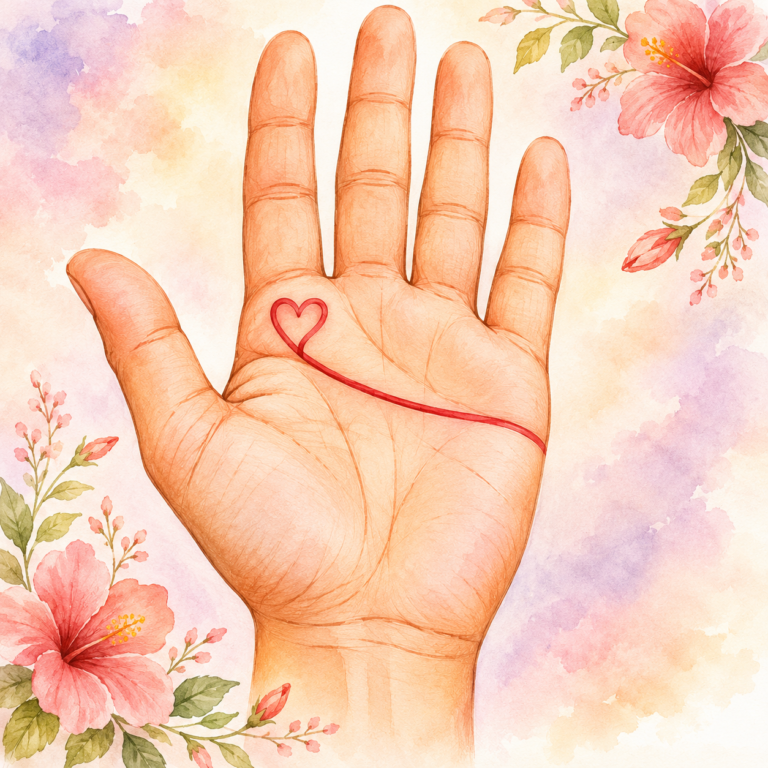
Archana Bhat: The heart line is considered the most important feature for understanding a person’s emotional nature in traditional palmistry. Its length, curve, depth and ending point all add to the picture.
For example, a heart line that curves upward and ends between the index and middle fingers is often traditionally associated with a balanced, warm and caring nature in relationships. A straight heart line may be linked with a calm, practical emotional style. A heart line with many small branches is sometimes associated with a sociable, affectionate personality.
Combined with the mounts, especially the Mount of Venus, the heart line gives a traditional picture of how a person relates to others. This picture describes emotional style; it does not judge whether a person is “good” or “bad” at love.
Question 7: Can relationship lines change?
Archana Bhat: Yes, they can. Relationship lines are small and fine, and fine lines are among the most changeable features of the hand. They may become deeper, fainter or more numerous over time.
Traditional palmists interpret such changes symbolically, as reflections of changing emotional experiences. Practically speaking, changes in skin, age and even the way we hold our hands can also affect how these lines look. Either way, it reminds us that relationships, and the hands themselves, are not fixed.
Question 8: Are relationship interpretations the same for everyone?
Archana Bhat: Not at all. Two people with similar-looking relationship lines might receive quite different traditional readings, because the palmist would also consider the heart line, the Mount of Venus, the shape of the hand and other features.
Cultural context matters too. Older palmistry texts were written at times when ideas about marriage and relationships were very different from today. A responsible modern reading should respect that people’s relationships come in many forms and that each person’s life is their own.
Question 9: Should people make important relationship decisions based on palmistry?
Archana Bhat: No. Please do not make decisions about marriage, separation, commitment or compatibility based on palm readings. These are some of the most important decisions in life, and they deserve honest conversations, trust, time and, where needed, the support of counsellors or trusted family and friends.
If palmistry encourages you to reflect on how you express love or what you value in a partner, that can be a positive thing. But use that reflection as the beginning of a conversation, not the end of one.
Common Myths and Misconceptions
- “The number of lines equals the number of marriages.” Relationship lines cannot count partners or marriages.
- “No marriage line means you will never marry.” Many people with faint or no visible lines have happy, long-lasting relationships.
- “A forked line means divorce.” A fork is traditionally read as different paths or distance, and it is not a prediction of separation.
- “Palm matching shows compatibility.” There is no reliable evidence that comparing palms can determine compatibility.
- “The heart line shows how much someone can love.” The heart line is traditionally linked with emotional style, not the capacity to love.
Key Takeaways
- Relationship lines are small horizontal lines below the little finger, on the outer edge of the palm.
- The heart line describes emotional style; relationship lines are traditionally linked with significant bonds.
- Line count, length and shape carry traditional meanings but cannot predict marriage or partners.
- Relationship lines are fine lines and can change over time.
- Important relationship decisions should be made through communication, trust and good advice.
A Closing Note from Archana
“Love is one of the most beautiful parts of being human, and it deserves care and understanding, not fear. If exploring your heart line helps you think more kindly about how you connect with people, I am happy. Let the choices themselves come from your heart and your wisdom. In our next conversation, we will look at the fingers, thumb and fingertips.”
About the Author
Archana Bhat is a palmistry expert who shares the traditional knowledge of hand reading in simple, accessible language for beginners and curious readers. Through “The Wisdom of Palmistry” series, she encourages readers to approach palmistry as a cultural tradition and a tool for self-reflection, never as a substitute for professional advice.
Consultations
Discover insights into your personality, strengths, relationships, career and life journey through personalised palmistry consultations.
Consultations Available In: Telugu, Hindi, Marathi & English.
🌍 Special Consultations for NRI Clients – Flexible appointment timings according to your country and time zone.
For Appointments & Enquiries:
📞 +91 8977118552
📞 +91 9082650679