Question 5: Can palmistry traditionally associate different markings with career changes?
Archana Bhat: Yes. Traditional palmistry links certain signs near or on the fate line with career events. A small square on the fate line is often associated with protection during a difficult period. A star or a small cross may be read as a significant event or turning point. A line that crosses the fate line may be associated with an outside influence or interruption.
Palmists sometimes attempt to “time” these events by dividing the fate line into age ranges. I would treat such timing with great caution. The methods vary between traditions and the results are not reliable. We will talk more about special markings later in this series.
Question 6: What is the relationship between the fate line and sun line?
Archana Bhat: The two lines are traditionally seen as partners. The fate line represents direction, structure and effort, while the sun line, running towards the ring finger, represents creativity, satisfaction and recognition.
When both lines are present and clear, traditional readings often describe a person who not only works steadily but also finds enjoyment and fulfilment in that work. A strong fate line without a sun line may be read as diligent effort that is not always outwardly recognised. A sun line without a strong fate line might be associated with success that comes through talent, personality or creative freedom rather than a conventional career path.
Simple example: Think of the fate line as the road and the sun line as the scenery. One tells you that you are travelling steadily; the other tells you whether you are enjoying the journey.
Question 7: Can a person’s career direction change over time?
Archana Bhat: Of course, and many people change direction more than once. Interestingly, the fate line is one of the lines that palmists say can change most noticeably over the years. Sections can appear, fade or become more defined.
In traditional palmistry, this is seen as a reflection of the person’s evolving path. In practical terms, it is a good reminder that your career is not written in your hand. It is shaped by your learning, your choices, your opportunities and the effort you put in.
Question 8: Can palmistry determine whether someone will become successful?
Archana Bhat: No. Palmistry cannot determine or guarantee success. I want to be very clear about this. There is no scientific evidence that any line or marking can predict career outcomes, income or achievement.
What traditional palmistry can do is offer a framework for reflection. It may prompt you to think about your strengths, the kind of work you enjoy and the way you approach challenges. That reflection can be valuable, but success comes from skills, persistence, relationships, timing and many factors that have nothing to do with lines on the hand.
If anyone tells you that your palm guarantees success, or failure, please treat that claim with healthy scepticism.
Question 9: How should people approach career decisions rather than relying on palm readings?
Archana Bhat: Use practical tools. Think honestly about your skills, interests and values. Research the industry you are considering. Talk to people who already do the work. Seek advice from mentors, career counsellors or qualified financial advisers where relevant. Try short courses or small projects before making big changes.
If you enjoy palmistry, you can use a reading as a starting point for reflection, for example, “My reading suggested I value independence. Is that true for me?” But the decision itself should rest on real information and careful thought.
Common Myths and Misconceptions
- “No fate line means no career.” Many successful people have no visible fate line.
- “A broken fate line means you will lose your job.” A break is traditionally read as a change, which can be very positive.
- “Palmistry can tell your exact salary or success.” Palmistry cannot predict income or guarantee achievement.
- “Fate lines are fixed for life.” The fate line is one of the lines most likely to change in appearance over time.
- “Palm timing is precise.” Methods for dating events on the palm vary and are not reliable.
Key Takeaways
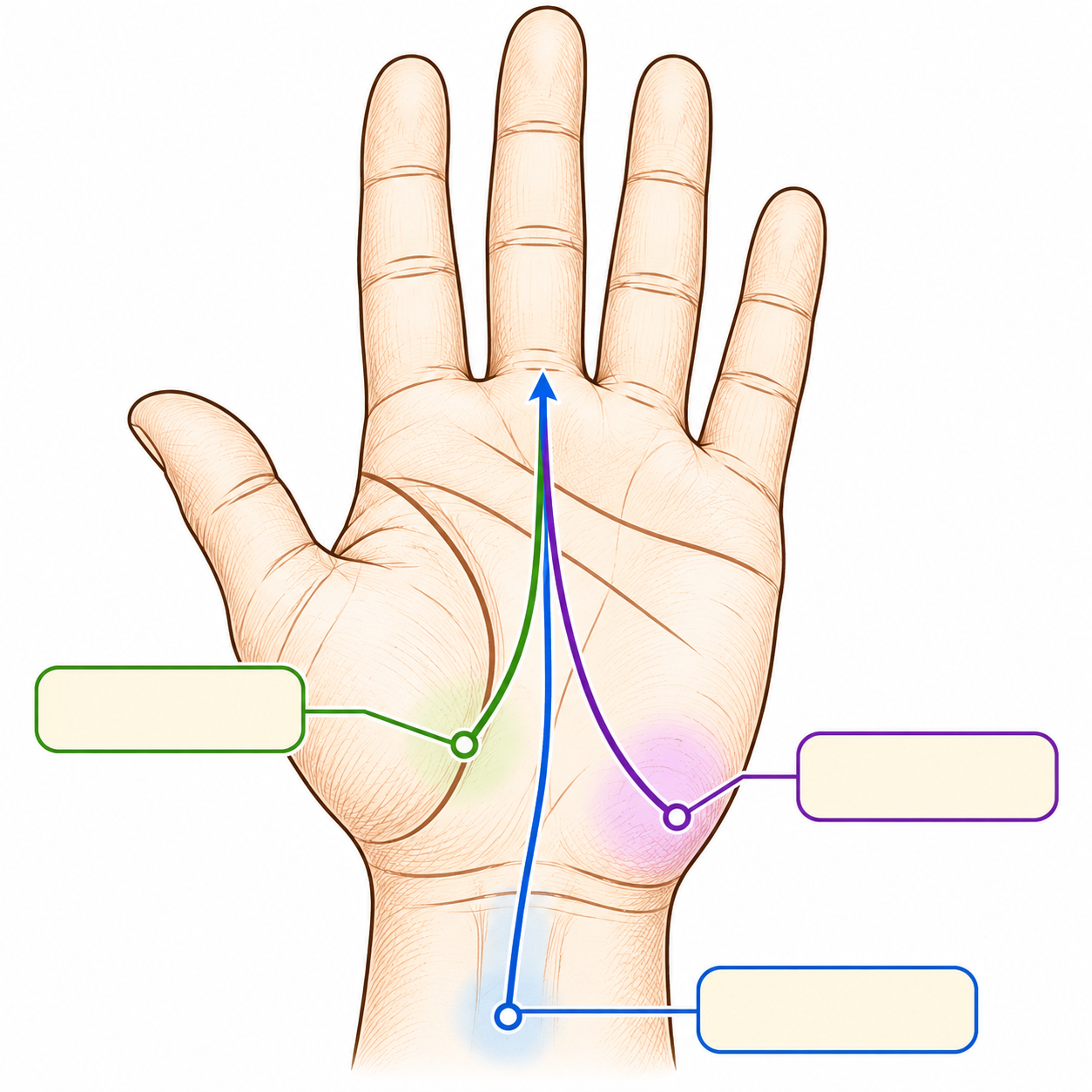
- The fate line runs up the centre of the palm and is traditionally linked with direction and career.
- Many people have a faint, partial or absent fate line, and that is perfectly normal.
- Breaks and branches are traditionally read as change and opportunity, not failure.
- The fate and sun lines together are associated with effort and fulfilment.
- Palmistry cannot predict success; career decisions need practical research and advice.
A Closing Note from Archana
“Your career is something you build, step by step, through learning, effort and the choices you make. If the fate line inspires you to reflect on what you truly want from your work, that is a wonderful use of palmistry. Let the decisions themselves be guided by clear thinking and good advice. In our next conversation, we will explore love, marriage and relationship lines.”
About the Author
Archana Bhat is a palmistry expert who shares the traditional knowledge of hand reading in simple, accessible language for beginners and curious readers. Through “The Wisdom of Palmistry” series, she encourages readers to approach palmistry as a cultural tradition and a tool for self-reflection, never as a substitute for professional advice.
Consultations
Discover insights into your personality, strengths, relationships, career and life journey through personalised palmistry consultations.
Consultations Available In: Telugu, Hindi, Marathi & English.
🌍 Special Consultations for NRI Clients – Flexible appointment timings according to your country and time zone.
For Appointments & Enquiries:
📞 +91 8977118552
📞 +91 9082650679