The Pantheon: Rome’s Architectural Marvel
Nestled amidst the bustling modernity of Rome, the Pantheon is a magnificent reminder of the ingenuity and vision of ancient Roman architects. Unlike many ancient structures that have succumbed to the ravages of time, the Pantheon remains remarkably intact, giving visitors a unique opportunity to experience Roman architecture as it was intended to be seen.
A Brief History
The Pantheon you see today was built between 125 and 128 A.D. under the reign of Emperor Hadrian, although the site’s history stretches back even further. The original Pantheon was constructed by Marcus Agrippa in 27 B.C., but it was destroyed in a fire. Hadrian’s version not only replaced it but also transformed it into an architectural wonder.
The inscription on the façade still bears Agrippa’s name: M.AGRIPPA.L.F.COS.TERTIVM.FECIT (Marcus Agrippa, son of Lucius, made this in his third consulship), a nod to its origins and a testament to Hadrian’s respect for Rome’s history.
The Pantheon’s Ingenious Design
The Pantheon is renowned for its harmonious proportions and innovative construction techniques, which reflect the Romans’ mastery of architecture, engineering, and physics.
- The Dome:
- The dome of the Pantheon is its most iconic feature. At 43.3 meters (142 feet) in diameter, it was the largest dome in the world for over 1,300 years and remains the largest unreinforced concrete dome ever built.
- The oculus at the dome’s apex, an open circular skylight, serves both practical and symbolic purposes. It allows natural light to flood the interior and represents the “eye of heaven,” connecting the earthly realm with the divine.
- The Portico and Columns:
- The entrance to the Pantheon is marked by a grand portico supported by 16 massive granite columns, each weighing over 60 tons. These columns were quarried in Egypt and transported to Rome, a feat that underscores the vast reach of the Roman Empire.
- Interior Harmony:
- The interior of the Pantheon is a perfect sphere, with the height from the floor to the oculus matching the diameter of the dome. This symmetry creates a sense of balance and serenity, embodying the Romans’ philosophical and aesthetic ideals.
From Temple to Church
Originally built as a temple dedicated to all Roman gods (Pan Theos meaning “all gods”), the Pantheon’s purpose evolved with the rise of Christianity. In 609 A.D., it was consecrated as a Christian church, the Basilica of St. Mary and the Martyrs (also known as Santa Maria ad Martyres). This transition not only saved it from destruction but also ensured its continuous use and preservation.
Today, the Pantheon is a Catholic church, a tourist attraction, and a venue for special events. It also houses the tombs of notable figures, including the Renaissance artist Raphael and the first two kings of unified Italy, Vittorio Emanuele II and Umberto I.
Exploring the Ancient Heart of Rome
While the Pantheon is a highlight, it is just one of many ancient landmarks that make a walk through Rome’s historic center an unforgettable experience.
- The Colosseum:
- Known as the Flavian Amphitheater, the Colosseum is a symbol of Rome’s imperial might. Walking through its massive arches and imagining the gladiatorial combats that once took place here is a humbling experience.
- The Roman Forum:
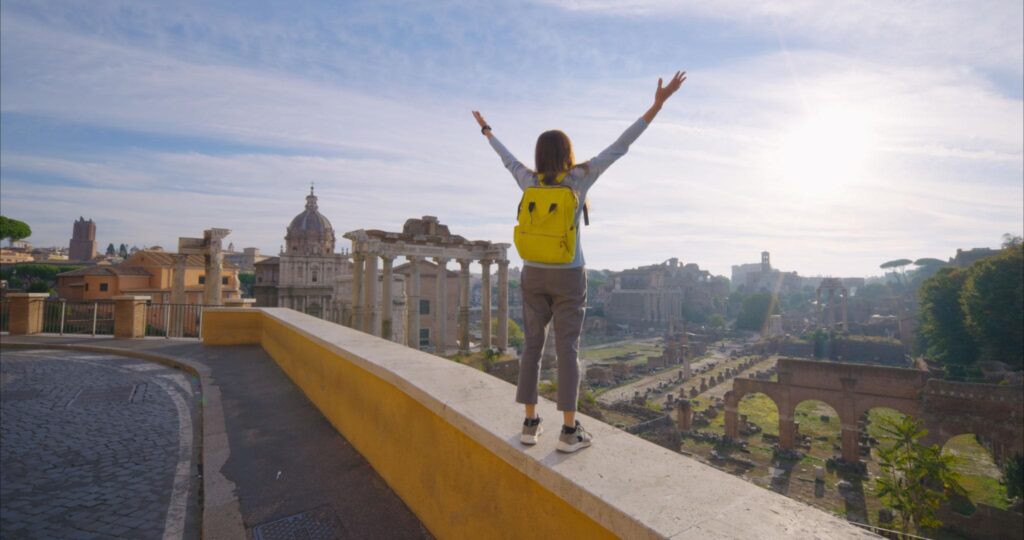
- Once the epicenter of Roman political, commercial, and social life, the Forum is now a sprawling archaeological site where ancient temples, basilicas, and monuments tell the story of Rome’s rise and fall.
- Palatine Hill:
- Overlooking the Forum, this hill is steeped in legend and history, believed to be the site of Rome’s founding by Romulus. It later became the residence of emperors, whose opulent palaces still hint at their former glory.
- Piazza Navona:
- Built on the site of Domitian’s ancient stadium, this lively square is a blend of Baroque artistry and ancient foundations, featuring stunning fountains and bustling cafes.
Why the Pantheon Endures
What makes the Pantheon particularly special is not just its architectural brilliance but its ability to connect us to the past. As you step inside its cavernous interior, you are standing in a space that has been in continuous use for nearly two millennia. The marble floors have borne the footsteps of emperors, artists, and pilgrims, and the walls have echoed with prayers and celebrations through the ages.
The Pantheon also serves as a reminder of the Romans’ advanced understanding of materials and construction techniques. The secret to the dome’s durability lies in its concrete composition, which becomes progressively lighter as it rises, with pumice replacing heavier stones near the top.
Practical Tips for Visiting
If you’re planning to visit Rome and explore its ancient landmarks, here are a few tips to enhance your experience:
- Arrive Early: The Pantheon can get crowded, especially during peak tourist seasons. Arriving early allows you to enjoy the site with fewer people.
- Guided Tours: Consider joining a guided tour to learn more about the history and engineering marvels of the Pantheon and other ruins.
- Combine with Nearby Landmarks: The Pantheon is located in the heart of Rome, close to Piazza Navona, the Trevi Fountain, and other iconic sites, making it easy to include in a walking tour.
- Dress Respectfully: As the Pantheon is an active church, modest attire is recommended.