Pregnancy Is Power: How Hindu Women Shape Future Generations
In the sacred landscape of Hindu philosophy, pregnancy is not merely a biological event—it is a transformative, spiritual, and deeply societal act. It is a symbol of Shakti, the
Dussehra, also known as Vijayadashami, is a major Hindu festival that symbolizes the victory of good over evil. Celebrated on the tenth day of the Hindu lunar month of Ashwin (typically in September or October), Dussehra marks the culmination of the nine-day festival of Navaratri. The festival holds deep religious and cultural significance, as it commemorates Lord Rama’s triumph over the demon king Ravana, representing the eternal struggle between righteousness and evil.
Dussehra is celebrated to honor the victory of Lord Rama, an incarnation of Vishnu, over Ravana, the ten-headed king of Lanka. According to Hindu mythology, Ravana kidnapped Rama’s wife, Sita, and took her to his kingdom. With the help of his devoted brother Lakshmana, the loyal Hanuman, and an army of monkeys, Rama waged a war against Ravana. The defeat of Ravana and the rescue of Sita symbolize the triumph of truth, justice, and dharma (righteousness).
The name Dussehra is derived from the Sanskrit words “dasha” (meaning “ten”) and “hara” (meaning “defeat”), signifying the defeat of Ravana, who had ten heads, by Lord Rama.
The roots of Dussehra can be traced to the ancient epic, Ramayana, which narrates the story of Rama and his journey to rescue Sita from Ravana. The festival’s celebration is also linked to the agricultural cycle, as it falls during harvest time, symbolizing the reaping of good over evil.
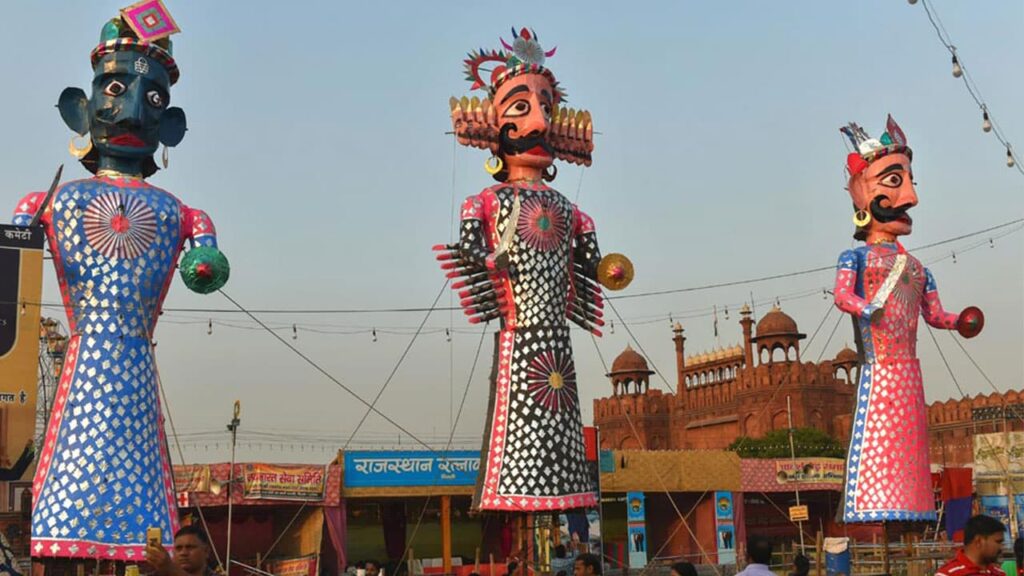
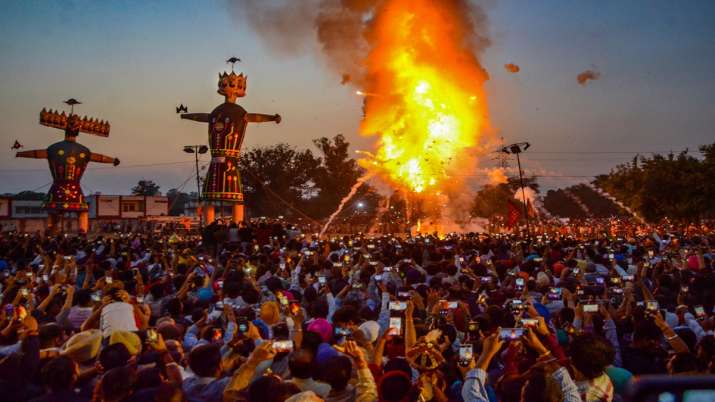
In northern India, Dussehra is marked by the dramatic enactment of episodes from the Ramayana, known as Ram Lila, culminating in the burning of large effigies of Ravana, Meghnad (Ravana’s son), and Kumbhkaran (Ravana’s brother). This act is symbolic of the annihilation of evil forces.
In contrast, in southern India, Dussehra celebrates the victory of the goddess Durga over the buffalo demon Mahishasura, commemorating her fierce battle to restore peace and balance in the universe.
There are multiple legends associated with Dussehra, but the most widely known myth is from the Ramayana. Ravana, a powerful demon king, abducted Sita, leading Rama to wage a battle against him. After a fierce combat lasting for nine days, Ravana was finally defeated on the tenth day. This victory of Lord Rama is celebrated as Dussehra, representing the victory of good over evil.
In another popular legend, Dussehra marks the victory of Goddess Durga over Mahishasura, a powerful demon who terrorized both heaven and earth. After a relentless battle, Durga killed Mahishasura, symbolizing the triumph of divine forces over darkness and ignorance.
Navaratri, meaning “nine nights,” is a festival dedicated to the worship of the goddess Durga in her nine different forms. The festival spans nine days and is followed by Dussehra on the tenth day. Navaratri represents the nine-day battle between Durga and Mahishasura, which ends with her victory on Dussehra.
The nine days of Navaratri are devoted to nine different forms of the goddess:
Thus, Navaratri and Dussehra are intertwined, with the former preparing devotees spiritually for the grand culmination of good’s victory on the latter.
The primary purpose of Navaratri is to invoke the divine feminine energy or Shakti. It is believed that the goddess Durga descends to Earth during Navaratri to rid her devotees of evil and to bring peace and prosperity. The nine days are meant to purify the body and mind, and rituals such as fasting, praying, and meditation are encouraged.
There is also a scientific aspect to Navaratri. The festival falls during the seasonal transition from monsoon to winter, a time when our bodies are more susceptible to illness. The rituals of fasting and detoxification during Navaratri are said to boost the immune system and prepare the body for the change in seasons.
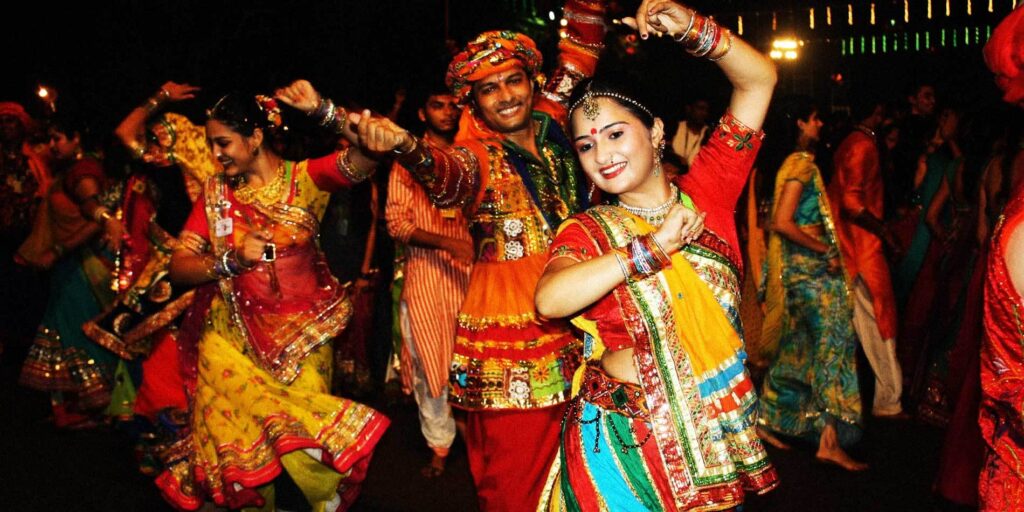
Navaratri holds a special place in the hearts of devotees as it is a time of prayer, fasting, and reflection. It is believed that during these nine days, divine energy is at its peak, making it an ideal time to invoke the blessings of the goddess Durga. The festival is marked by community celebrations, including dance forms like Garba and Dandiya in Gujarat, cultural performances, and the decoration of temples and homes.
The nine days of Navaratri represent the nine forms of Durga, each with its own significance. These forms are believed to represent different aspects of life, such as strength, purity, courage, and knowledge. The nine-day period allows devotees to focus on each form of the goddess, worshipping her in a sequential and disciplined manner.
While Dussehra is primarily associated with the worship of Lord Rama, it is also closely connected to the goddess Durga. In different parts of India, the focus of the celebration varies:
During Navaratri, different rituals are followed to worship the nine forms of Durga:
On Dussehra, effigies of Ravana, Meghnad, and Kumbhkaran are burned to signify the destruction of evil. Special prayers are offered to Lord Rama and Durga, and Ram Lila performances are held to depict the story of the Ramayana.
Dussehra is celebrated with great enthusiasm across India, but some cities are particularly famous for their grand festivities:
Navaratri is rooted in the legend of Durga and her battle against Mahishasura. The goddess is said to have fought for nine days and finally defeated the demon on the tenth day, known as Vijayadashami. The festival, therefore, symbolizes the triumph of good over evil, not just in the physical sense but also in the moral and spiritual sense.
Both Dussehra and Navaratri hold immense importance in Hindu culture. These festivals are reminders that no matter how powerful evil may seem, righteousness and goodness will always prevail. They encourage devotees to reflect on their own lives, to battle inner evils, and to emerge victorious with the blessings of the divine.
Dussehra and Navaratri are much more than mere festivals; they are symbolic celebrations of life’s eternal struggle between good and evil. By worshipping gods and goddesses like Lord Rama and Durga, Hindus across the world draw strength and inspiration from their stories, reinforcing their own commitment to living righteous lives. From its mythological roots to its modern-day grandeur, Dussehra is a timeless celebration of victory, devotion, and hope for a better future.
In the sacred landscape of Hindu philosophy, pregnancy is not merely a biological event—it is a transformative, spiritual, and deeply societal act. It is a symbol of Shakti, the
In the vast and timeless tradition of Hinduism, one of the most profound recognitions is this: The mother is the first guru. She is not only the giver of life but the sculptor of t
In the rich tapestry of Indian cultural and spiritual heritage, one timeless tradition stands out for its vision, depth, and sensitivity: Garbh Sanskar. This ancient Vedic practice
In a world constantly searching for righteous leaders, visionaries, and changemakers, it is easy to overlook where such greatness truly begins — in the lap of a mother. Hindu phi
In the rich tapestry of Hindu philosophy, life is seen not just as a personal journey but as an intricate part of a grand cosmic design. Among the many sacred responsibilities one
Pregnancy is more than a biological process; in the Vedic and Hindu worldview, it is a sacred rite of passage. It is a time when a soul is invited into the world, and the energy su
Pregnancy doesn’t begin with a positive test—it begins with a shared intention. In the spiritual view of conception, especially within Vedic and holistic traditions, planning a
In Hindu Vedic philosophy, conception is not a random biological event—it is a sacred union of energies meant to welcome a divine soul into the world. The energy a man brings int
Parenthood is not merely a biological milestone; in many spiritual traditions—including Hindu philosophy—it is considered a sacred duty (dharma) and a path of immense personal
"Enjoyed this post? Don’t miss out on future updates – subscribe now to stay inspired and informed!"