The Retailer’s Growth Partner: Why Choosing the Right Distributor Matters
Ask any successful two-wheeler spare-parts shop owner what really made their business grow. Most people expect the answer to be “a good location” or “lots of customers.” Th

A distributor may manage hundreds or thousands of retailers. Every day brings new orders, outstanding invoices, payment commitments and follow-ups. The challenge is not simply knowing who owes money — most distributors can pull that report from their accounting software in under a minute. The real challenge is knowing who needs attention, when they need attention, and how that conversation should actually happen.
That gap between having the data and acting on it is where working capital quietly leaks out of distribution businesses every single month. It is also the gap that a new category of software is now built to close. Over the next few years, the way distributors recover money from their retailer network is likely to change more than it has in the previous three decades.
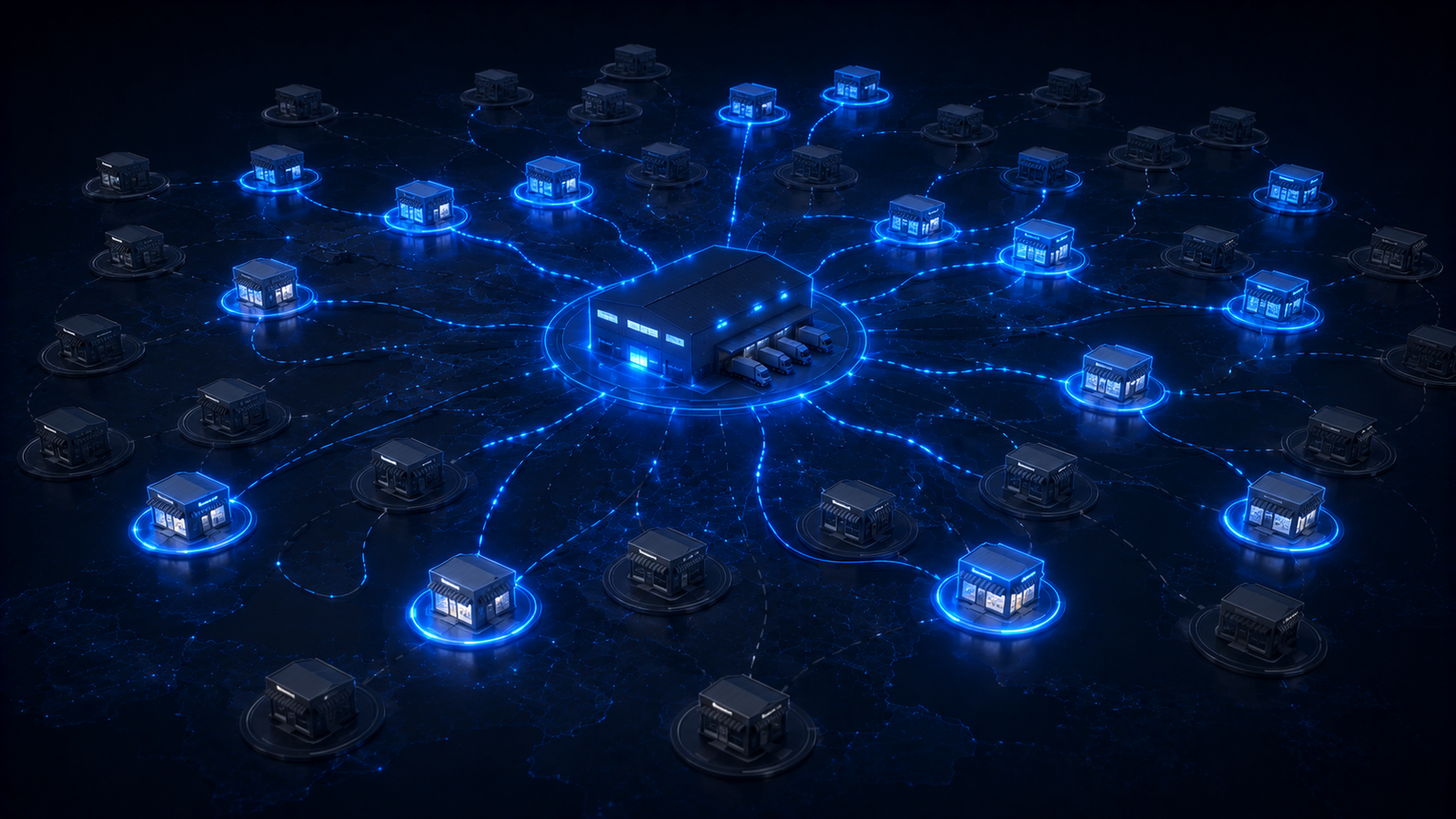
Distribution is a volume business built on thin margins and long relationships. A mid-sized distributor might serve 800 to 3,000 retail outlets across a state or region. Each of those retailers places orders on different cycles, pays on different terms, and behaves differently under pressure. Some pay on the day the invoice falls due. Some pay only when a field executive physically stands in their shop. Some genuinely intend to pay but need a reminder at the right moment in their own cash cycle.
The operational load this creates is substantial. Consider what a collections function actually has to do in a single working week:
Multiply that by 800 retailers and it becomes clear why most distribution businesses simply cannot do it properly. There are not enough hours, not enough people, and not enough attention to go around. So collections default to a triage model: chase the largest outstanding amounts, chase the loudest problems, and let everything else drift.

A field executive or telecaller can hold perhaps forty to sixty meaningful conversations in a day, and that is on a good day with clean data and cooperative counterparties. Doubling the retailer network means doubling the calling team. The cost of collections therefore grows in direct proportion to the size of the network, which erodes the very economics that growth was supposed to deliver.
Most collection tracking still happens in spreadsheets maintained alongside the accounting system. A spreadsheet is an excellent record of what happened. It is a poor instrument for deciding what to do next. It cannot tell a manager that a particular retailer has broken three consecutive payment commitments and should now be handled differently, or that another retailer historically pays within two days of a reminder and simply has not received one.
Enormous volumes of distributor collection activity now happen over WhatsApp and similar channels. It is fast and familiar, but it is also invisible to the business. Commitments made in a personal chat thread do not appear in any system. When the executive who owns that relationship leaves, the context leaves with them.
Two telecallers handling the same overdue account will conduct two different conversations. Tone varies with mood, workload and seniority. Scripts drift. Some accounts get chased three times in a week; others get forgotten for a month. Consistency is difficult to enforce when the work depends entirely on individual discipline.
Automated reminder emails and SMS messages generated by an ERP treat every retailer identically. They carry no awareness of payment history, relationship value or prior commitments. Retailers learn very quickly that these messages carry no consequence, and they stop reading them.
The problem is not that distributors lack data about who owes them money. The problem is that data alone does not make a phone call, hold a conversation, or record a commitment. |
Over the past few years, a genuine technical shift has occurred. Speech recognition, natural language understanding and speech synthesis have each crossed a threshold where a machine can hold a short, purposeful, structured conversation in a real business context — including in Indian languages, over ordinary telephone lines, with ordinary background noise.
This is different from the interactive voice response systems most people have encountered. IVR presents a fixed menu and waits for a keypress. An AI agent listens to what a person says, interprets intent, responds appropriately, and adapts within the boundaries of its task.
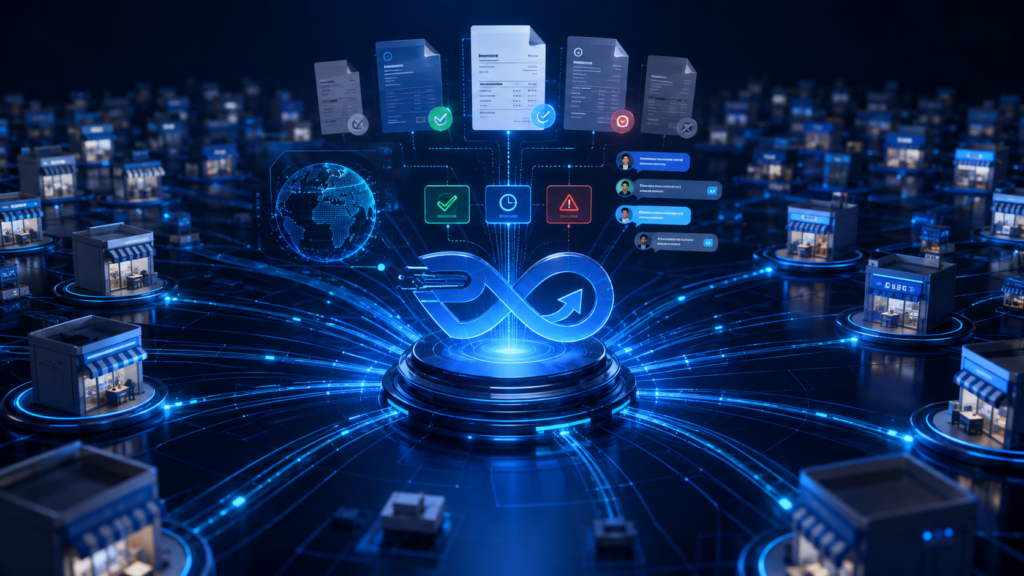
The useful way to think about an AI agent is as a repeating loop of five capabilities:
Each of those five steps exists in a distributor’s collection process today. The difference is that today they are performed by people whose capacity is finite, and tomorrow they can be performed by a system whose capacity is elastic.

An AI collection agent is software that takes responsibility for the routine, repeatable portion of a distributor’s payment follow-up: identifying which retailers to contact, calling them, conducting a structured conversation about outstanding invoices, capturing what was committed, and following up on schedule.
In practice, it operates through a defined sequence:
That last point deserves emphasis. A well-designed AI collection agent is not built to replace the human relationship. It is built to handle the high-volume routine layer so that human attention is concentrated where judgement, negotiation and relationship equity actually matter.
RIA is being built around a specific conviction: that collections is not a communication problem to be automated, but an intelligence problem to be solved, with communication as the final step.
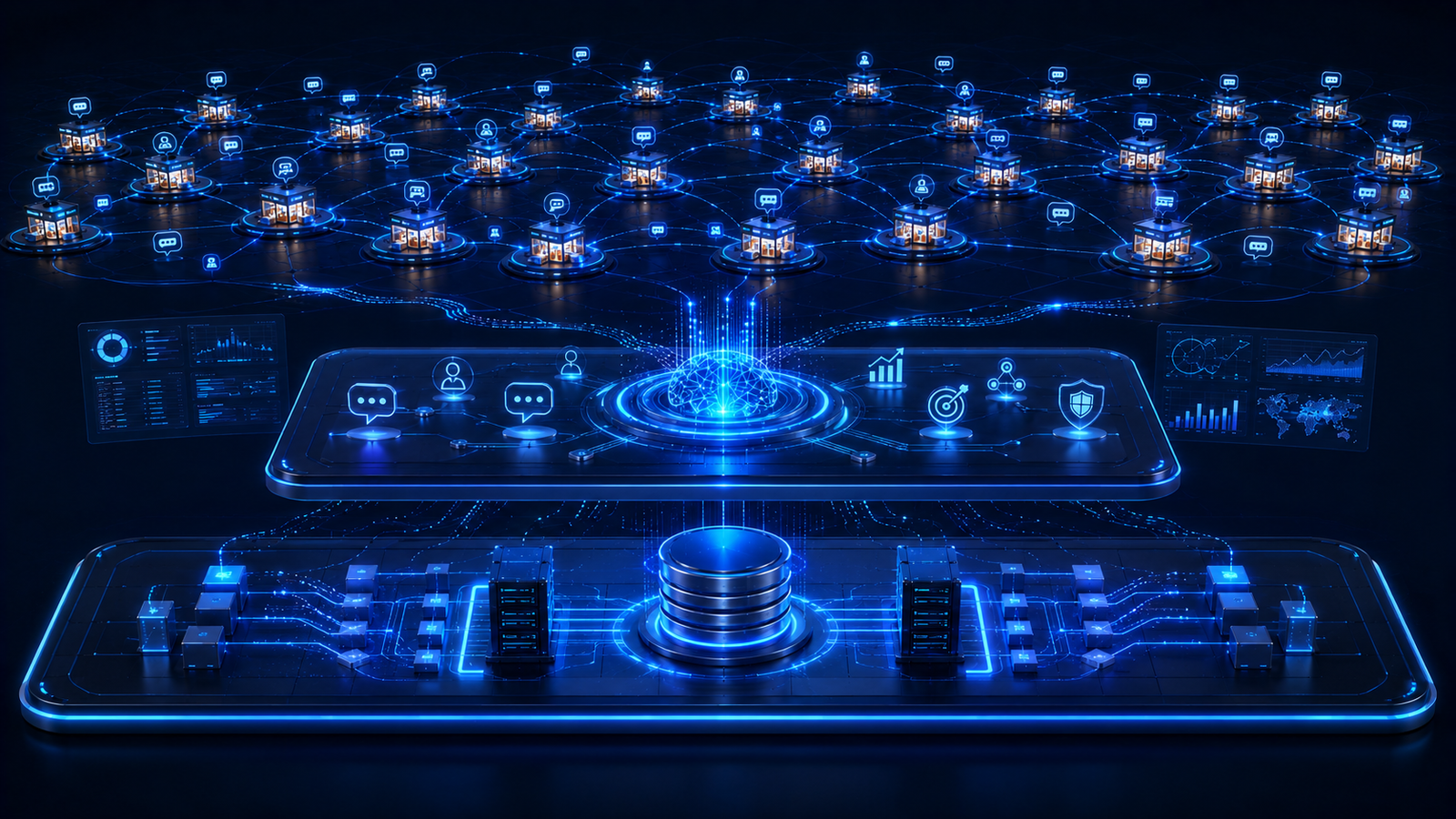
The RIA operating sequence runs: retailer data, then intelligence, then AI conversation, then collection action, then insight.
The design principle throughout is that the distributor stays in control. RIA proposes the priority list, conducts the conversation and records the outcome; the distributor decides the credit policy, the escalation thresholds and the tone of engagement.
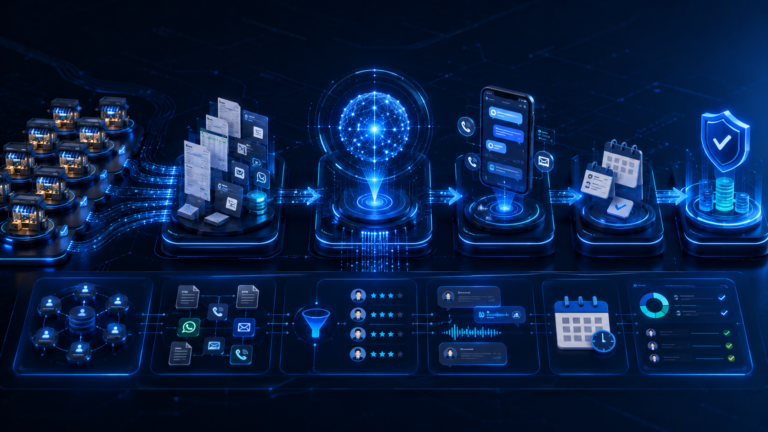
The benefits of moving collections onto an intelligent layer are operational before they are financial, and the operational gains are the more durable ones.
A note on expectations is warranted here. Any vendor quoting precise percentage improvements before a distributor has run the system on their own ledger is guessing. The honest framing is that intelligent collection systems change the capacity and consistency of the follow-up process, and outcomes follow from that change at a rate specific to each business, each category and each retailer network.
The interesting question is not whether AI agents can make collection calls. That is now largely settled. The interesting question is what a distribution business looks like when the routine communication layer becomes elastic.
The future distributor will not necessarily need a larger team to manage a larger retailer network. Instead, intelligent agents may increasingly become part of the distributor’s operating layer — sitting between the ERP that records transactions and the field team that manages relationships, handling the volume so that people can handle the exceptions.
That has second-order consequences worth thinking about. If collections become predictable, working capital planning becomes more accurate. If working capital planning becomes more accurate, distributors can take on more inventory, more territory or more principals with less risk. The value of solving collections properly is not confined to collections.

Distributor collections have remained manual for a long time not because the problem was ignored, but because the technology to solve it properly did not exist. Reports could tell a distributor who owed money. They could not make the call. That constraint has now lifted.
What is emerging is a different operating model for distribution — one where the routine follow-up layer is handled by intelligent agents working continuously across the entire retailer network, and where human effort is reserved for negotiation, escalation and relationship building. Distributors who adopt this model early will not simply collect faster. They will run a fundamentally more predictable business, with better visibility into their own cash position and less dependence on the memory and diligence of individual employees.
The shift is already underway. The question for most distribution businesses is not whether to make it, but how soon.






Ask any successful two-wheeler spare-parts shop owner what really made their business grow. Most people expect the answer to be “a good location” or “lots of customers.” Th
Hyderabad, September 13, 2026:The National Consumer Rights Commission (NCRC), Telangana, conducted a two-day voluntary Consumer Food Safety & Hygiene Inspection Initiative acro
Distribution software has historically been built to record. Orders, invoices, stock movements, receipts — the systems that run distribution businesses are, at their core, extrem
Predictions about the future of any industry tend to be either too timid or too fanciful. The useful version sits in between: identify what is structurally constrained today, ident
Every distributor knows what needs to happen after a retailer says “I will pay on the fifteenth”. Someone should check on the fifteenth. In practice, in most distributi
"Enjoyed this post? Don’t miss out on future updates – subscribe now to stay inspired and informed!"