The Mother: The First and Most Powerful Guru
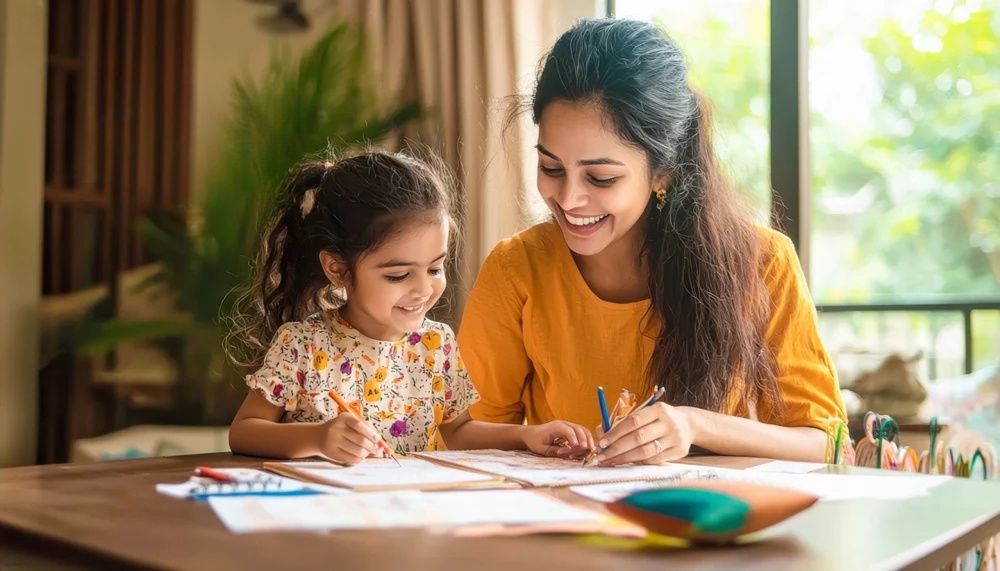
From conception to early childhood, a mother’s influence is far-reaching. Hinduism reveres the mother as divine in her role, equating her presence to that of a living deity in a child’s life.
In the Manusmriti and other dharmic scriptures, the mother is said to deserve more reverence than even the father or teacher, especially during the early years of a child’s life. In Mahabharata, it is said:
“Mātṛ devo bhava” – Let the mother be treated as God.
Why? Because she is the first universe the child knows.
Her Influence Starts in the Womb
- Her thoughts form the mental energy field around the fetus.
- Her emotions become the emotional blueprint of the child.
- Her food becomes the child’s nourishment.
- Her prayers and devotion create the spiritual foundation for the new soul.
A child in the womb is not passive—it listens, feels, and responds to the mother’s vibrations. Ancient Indian wisdom, echoed in Garbh Sanskar, recognizes that the mother teaches dharma, love, and strength long before she teaches words or alphabets.
How Hinduism Empowers Mothers Spiritually
Hinduism does not restrict women to biology; it elevates motherhood to a spiritual and societal role. A mother is:
- A Dharmic Architect – Teaching her children righteousness and moral values
- A Cultural Guardian – Preserving traditions, rituals, and stories
- A Spiritual Conduit – Leading the child to understand devotion (bhakti), discipline (tapas), and purpose (karma)
Figures like Queen Kunti, Sita Mata, Yashoda, and Gargi reflect this legacy—women who not only bore great sons but shaped their destinies through wisdom, prayer, and inner strength. They exemplify the empowered Hindu mother who became a guiding light for the world.
The Present Generation: Are Mothers Still Respected as Gurus?
In traditional Indian culture, mothers were revered, their words held weight, and their blessings were sought with deep sincerity. Today, however, societal shifts and modern influences have changed this dynamic in many households.
While many still hold mothers in high regard, the depth of spiritual reverence is diminishing. Respect is increasingly being measured in material terms—what she provides, not what she embodies.
Factors Affecting Respect for Mothers Today:
- Westernization and Materialism – Emphasis on independence and consumerism often devalues emotional and spiritual caregiving.
- Nuclear Families – Lack of intergenerational support makes the mother’s role more burdensome and less visible.
- Digital Distraction – Children today are more influenced by screens than their parents’ voices.
- Over-commercialization of Parenting – External experts and gadgets are replacing trust in the mother’s intuition and wisdom.
- Lack of Spiritual Foundation – In homes where dharma and rituals are neglected, the mother loses her spiritual status as guru.
- Work Pressure and Burnout – Mothers themselves are stretched thin, and unable to embody the calm, wise, spiritual presence they once could.
- Media Stereotypes – TV and movies sometimes depict mothers as overbearing or outdated, reducing their spiritual stature in the eyes of the young.
Circumstances Hindering the Mother’s Role as Guru
- Mental stress or anxiety during pregnancy
- Lack of community or spiritual support
- Neglect of rituals and prayer in daily life
- Children growing up without grandparents or elders
- Unbalanced gender expectations, where mothers are overburdened without emotional care
- Absence of dharmic education in schools or society
- Parents themselves disconnected from tradition
Restoring the Mother to Her Guru Role
The good news? Hinduism provides a timeless framework to revive and reclaim this divine role:
✅ Bring Back Daily Rituals – Lighting a lamp, chanting together, reading sacred stories—these reconnect mother and child to dharma.
✅ Empower Mothers Spiritually – Encourage mothers to read scriptures, meditate, and lead by example.
✅ Reinstate the Role of Garbh Sanskar – Let every mother prepare consciously for motherhood through spiritual practices.
✅ Celebrate Mothers Beyond One Day – Honor the mother’s wisdom as a constant presence, not just on Mother’s Day.
✅ Encourage Intergenerational Bonds – Grandmothers, aunts, and female elders can reinforce the mother’s role.
✅ Create Sacred Spaces at Home – Even a small altar becomes a center of teaching and bonding.