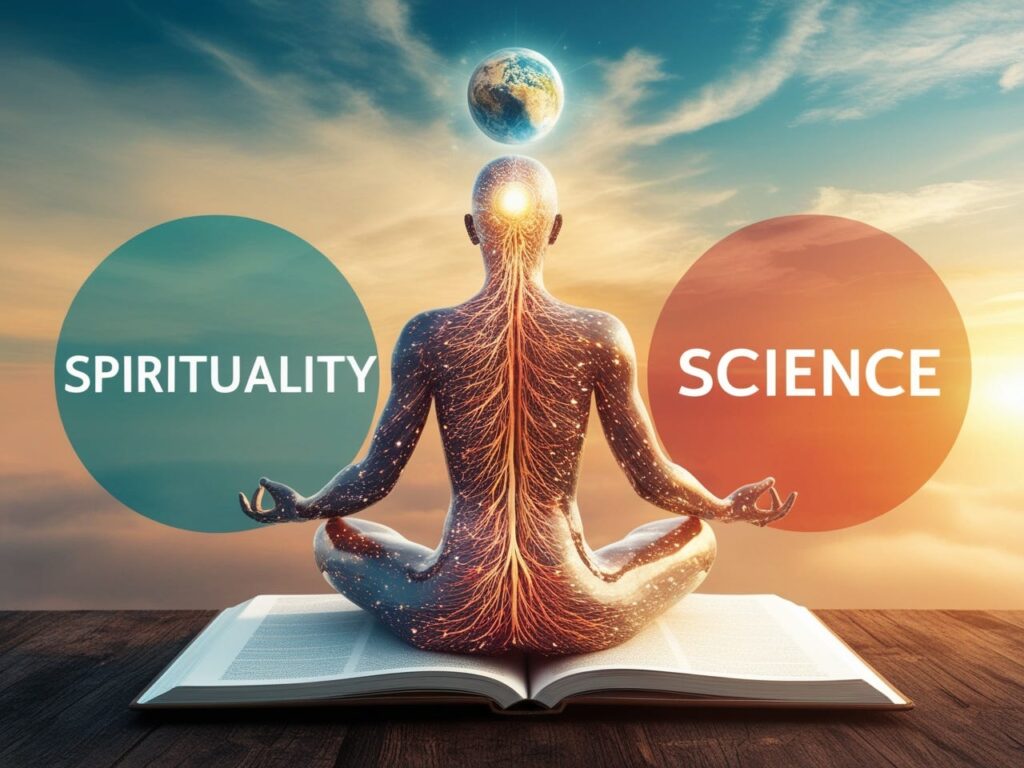
The Nature of Science and Spirituality
Science: The Exploration of the Physical World
Science is a systematic method of understanding the natural world. It relies on evidence, logic, and experimentation to uncover the laws that govern physical phenomena. Its focus is on the empirical—what can be observed, measured, and tested.
For example, science explains the mechanics of a sunrise through planetary rotation and the laws of gravity. It provides tools for advancements in medicine, technology, and space exploration, giving humanity a way to solve tangible problems.
Spirituality: The Journey Within
Spirituality, on the other hand, is a personal and often subjective pursuit of meaning, connection, and transcendence. It goes beyond the material realm to address questions about purpose, morality, and existence. Spirituality may involve practices like meditation, prayer, or mindfulness and often provides individuals with a sense of inner peace and interconnectedness with the universe.
While spirituality may not rely on empirical evidence, its value lies in its ability to foster emotional resilience, ethical behavior, and a deeper appreciation of life’s mysteries.
How Science and Spirituality Complement Each Other
Rather than being in conflict, science and spirituality often address different aspects of the human experience. Here are ways in which they can ]coexist and even enhance one another:
1. Addressing Different Questions
Science asks “how” questions, seeking to understand mechanisms and processes. For example, “How does the brain function?” or “How do galaxies form?” Spirituality, on the other hand, asks “why” questions, such as “Why are we here?” or “What is the purpose of life?” Together, they provide a fuller picture of existence.
- Science’s Role: Explains the physical workings of the universe.
- Spirituality’s Role: Provides meaning and purpose to those workings.
2. Shared Values: Curiosity and Wonder
Both science and spirituality stem from a deep sense of curiosity and awe about the universe. Scientists marvel at the complexity of DNA or the vastness of space, while spiritual seekers find inspiration in the interconnectedness of all life. This shared sense of wonder fosters mutual respect between the two domains.
3. Exploring Consciousness
Consciousness is one area where science and spirituality naturally overlap. While neuroscientists study the brain to understand the basis of thoughts and emotions, spiritual traditions explore consciousness through meditation and introspection. Together, they offer complementary insights into one of life’s greatest mysteries.
- Scientific Perspective: Consciousness arises from neural activity in the brain.
- Spiritual Perspective: Consciousness may transcend the physical, connecting us to a higher reality.
4. The Mind-Body Connection
Research has shown that practices rooted in spirituality, such as meditation and yoga, have measurable benefits for mental and physical health. For example, meditation can reduce stress, improve focus, and even alter brain structure, as proven by scientific studies. These findings validate spiritual practices while deepening our understanding of their mechanisms.
5. Ethical Guidance
While science provides knowledge and technological power, spirituality offers a moral framework for using that power responsibly. For example, advancements in genetic engineering raise ethical questions that science alone cannot answer. Spiritual principles of compassion, humility, and interconnectedness can guide decisions in such cases.
Challenges to Coexistence
Despite their potential harmony, there are challenges to integrating science and spirituality:
- Divergent Methodologies: Science relies on evidence and experimentation, while spirituality often values personal experience and intuition.
- Skepticism: Some scientists dismiss spirituality as unscientific, while some spiritual adherents reject science for being too materialistic.
- Misuse of Concepts: Pseudoscience can blur the lines between scientific rigor and spiritual beliefs, leading to misunderstandings.
Overcoming these challenges requires open-mindedness and a willingness to engage in meaningful dialogue.
Examples of Science and Spirituality Working Together
1. Quantum Physics and Spiritual Insights
Quantum physics has introduced concepts that resonate with spiritual teachings, such as interconnectedness and the observer’s role in shaping reality. For example, the phenomenon of quantum entanglement, where particles remain connected across vast distances, mirrors spiritual ideas of unity and oneness.
2. Neuroscience and Meditation
Scientific studies have shown that meditation, a spiritual practice, has tangible benefits for the brain. MRI scans reveal that regular meditation can increase gray matter density and improve emotional regulation, validating spiritual claims about its transformative power.
3. Environmental Conservation
Both science and spirituality emphasize the need to care for the planet. While science provides data on climate change and biodiversity loss, spiritual traditions often inspire a sense of reverence for nature, motivating action to protect it.
How to Integrate Science and Spirituality in Everyday Life
- Adopt a Curious Mindset: Embrace both scientific inquiry and spiritual introspection. Seek to understand the “how” and “why” of the world around you.
- Practice Mindfulness: Incorporate meditation or mindfulness into your routine to cultivate inner peace and improve focus.
- Explore the Intersection: Read books or attend talks that explore the connection between science and spirituality, such as works by authors like Fritjof Capra or the Dalai Lama.
- Stay Open-Minded: Avoid dismissing either perspective. Recognize that science and spirituality offer different but equally valuable insights.